
How to perform the Anterior Semont Maneuver
Treatment of the anterior canal
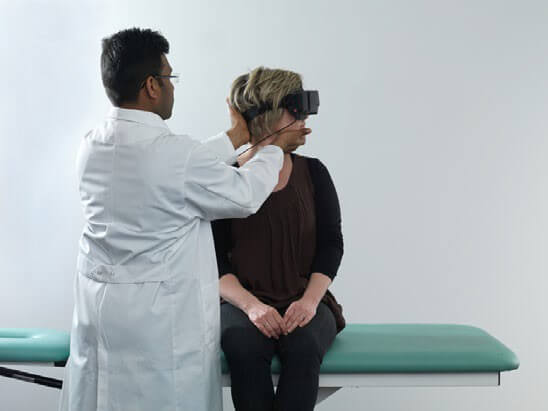 |
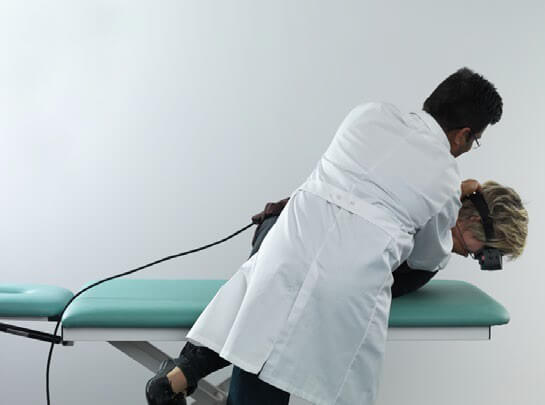 |
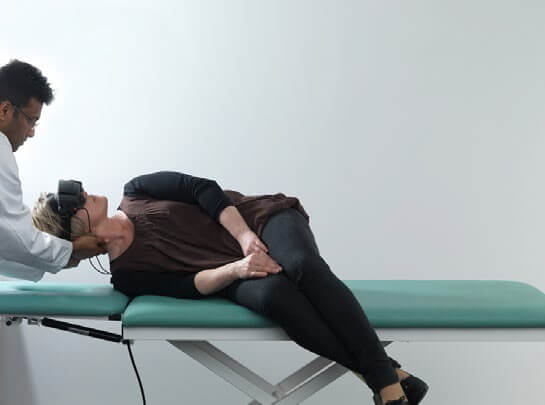 |
| Turn the head 45 degrees to the affected side. | Rapidly move into side-lying position on the affected side. | Rapidly move to patients unaffected side with the nose 45º upward |
Helpful hints
- Before performing any form of positioning maneuver, it is important to ascertain whether the patient has current or past injuries of the neck or spine
- If any neurological symptoms occur during the execution of positioning maneuvers, discontinue the procedure IMMEDIATELY and refer for a neurological evaluation. These symptoms might include, blurred vision, numbness, weakness of the arms or legs or
- The patient should experience vertigo when moved to the face-down position. If not, it is often useful to perform a slight headshake in an effort to loosen otolithic
Procedure
- Begin with the patient sitting on the examination table, facing the examiner, with the patient's head turned toward the affected side at a 45º angle
- Guide the patient into a side-lying position on the affected side. (This should be a rapid movement and the patient's nose should be pointing)
- Hold this position for 2-3 minutes
- While maintaining the 45º head position, guide the patient in a continuous motion from side-lying on the affected side to side-lying on the unaffected (The patient's nose should be pointing upward)
- Hold this position for 3-5 minutes
- Guide the patient back into a sitting position
References
- Semont, Freyss G, Vitte E. Curing the BPPV with a liberative maneuver. Adv Otorhinolaryngol. 1998;42:290-3
- Hughes CA, Proctor Benign paroxysmal positional vertigo. Laryngoscope. 1997;107:607-613
Presenter