
How to perform the Lempert (BBQ) Roll
What is the Lempert (BBQ) roll?
The Lempert (BBQ) roll, also known as the Lempert maneuver, is a treatment technique to relieve vertigo symptoms. It involves positioning the patient in the supine position with the head toward the affected side, rolling them onto the unaffected side, holding for 30-60 seconds, rolling into the prone position, holding again, rolling onto the affected side, holding again, and guiding the patient back to a sitting position.
Treatment of the horizontal canal
 |
 |
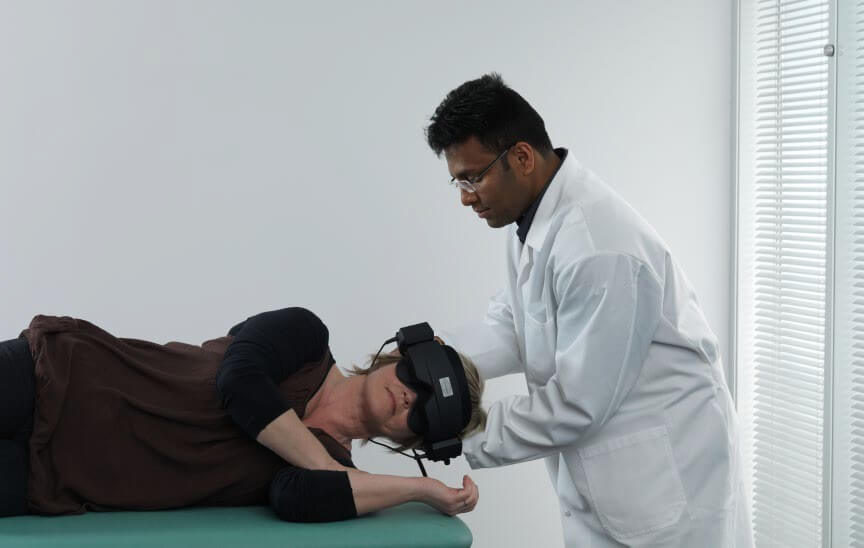 |
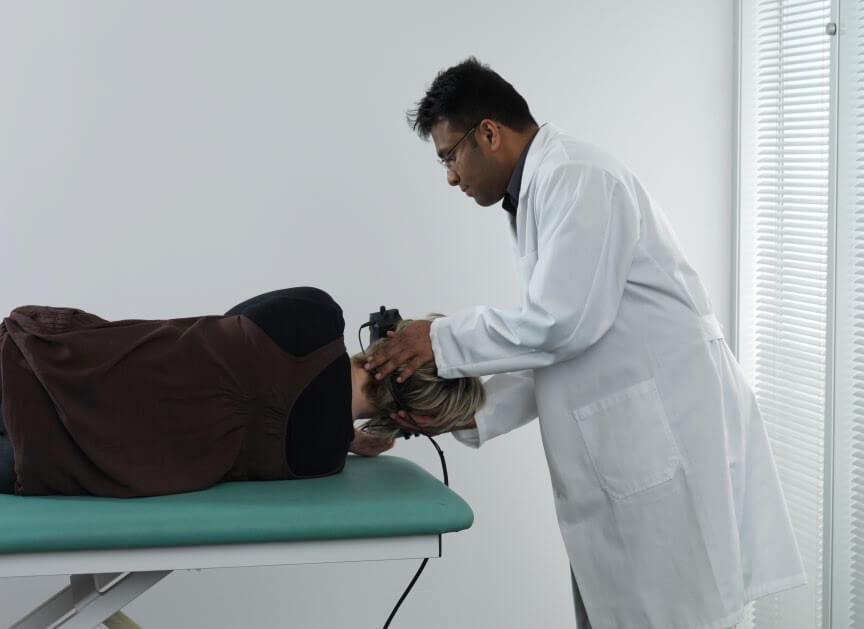
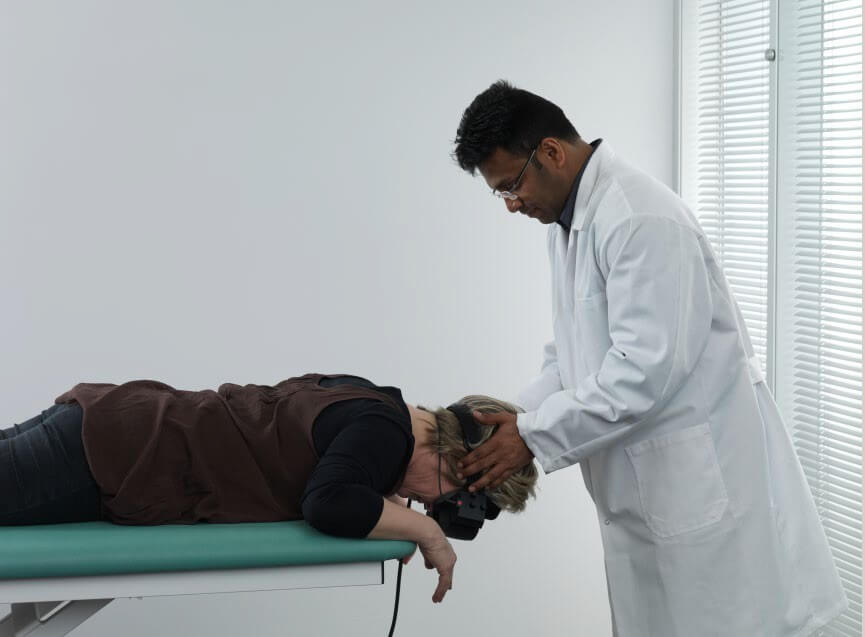
| Roll the patient's body toward the unaffected side. | Roll the patient into the prone position. | Roll the patients body toward the affected side. |
Helpful hints
1. Consider using VNG
Utilizing Video Frenzel or VNG while performing this maneuver is recommended to reduce the ability of the patient to fixate during the procedure in an attempt to reduce the nystagmus This will also allow the examiner to see even very slight horizontal nystagmus. If the treatment is successful, the nystagmus will beat in the same direction throughout the procedure.
2. Success rate
The success rate of this procedure in the treatment of horizontal canal BPPV is very high and success is usually immediate. If the procedure is successful, the patient may not exhibit symptoms during the last steps of the procedure.
3. In case of no marked improvement
If the patient does not show marked improvement upon completion of the procedure, you should repeat the procedure. If there is still no improvement, it is possible that the wrong ear has been treated.
4. Dizziness complaints
The patient's complaint will often be that he/she experiences "dizziness" when turning his/her head in bed without turning the body.
Lempert (BBQ) roll procedure
- Begin by having the patient lay in supine position with the head towards the affected side.
- Roll the patient onto the shoulder of the unaffected side.
- Hold this position for 30-60 seconds.
- Roll the patient into the prone position.
- Hold this position for 30-60 seconds.
- Next, roll the patient onto their affected side.
- Hold this position for 30-60 seconds.
- Guide the patient back into a sitting position.
Diagnoses
1. Right geotropic horizontal canal BPPV
Symptom
Nystagmus is greater when affected (right) ear is in the downward position.
Treatment
Lempert 360o roll to the LEFT.
Nystagmus
Should beat toward the LEFT throughout the entire procedure.
Implication
Pathological localization is generally in the utricle of the affected ear.
2. Left geotropic horizontal canal BPPV
Symptom
Nystagmus is greater when affected (left) ear is in the downward position.
Treatment
Lempert 360o roll to the RIGHT.
Nystagmus
Should beat toward the RIGHT throughout the entire procedure.
Implication
Pathological localization is likely in the utricle of the affected ear.
3. Right apogeotropic horizontal canal BPPV
Symptom
Nystagmus is greater when affected (right) ear is in the upward position.
Treatment
Convert nystagmus from apogeotropic to geotropic by using one of the methods listed below.
Implication
Pathological localization is likely in the horizontal canal of the affected ear.
4. Left apogeotropic horizontal canal BPPV
Symptom
Nystagmus is greater when affected (left) ear is in the upward position.
Treatment
Convert nystagmus from apogeotropic to geotropic by using one of the methods listed below.
Implication
Pathological localization is likely in the horizontal canal of the affected ear.
Conversion methods for apogeotropic horizontal canal BPPV
- Head Thrust
- Modified Gufoni
- Vannucchi-Asprella
- Forced Prolonged Positioning
References
- Lempert T, Tiel-Wilck K. A positional maneuver for treatment of horizontal canal benign positional Laryngoscope 1996;106:476-478
- Fife Recognition and management of horizontal canal benign positional vertigo. Am J Otol. 1998;19(3):345-351
- Tirelli G, Russolo M. 360-Degree canalith repositioning procedure for the horizontal canal. Otolaryngol Head Neck Surg. 2004 Nov;131(5):740-6
Presenter